
The Royal Orthopaedic Hospital

Orthopaedic subspecialties: Hand and Wrist Surgery

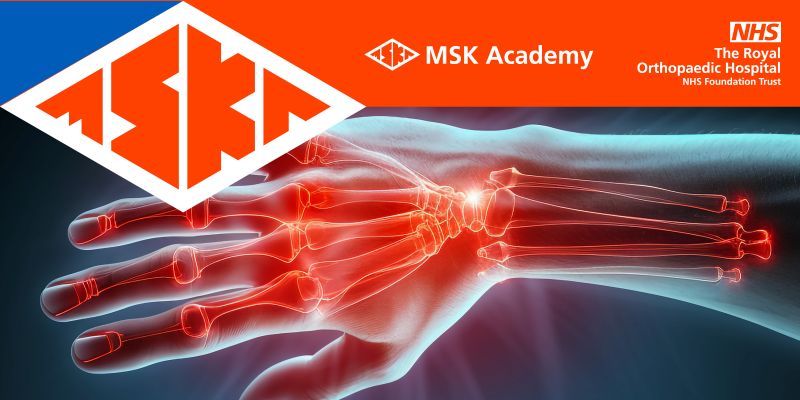
Mr Naeil Lotfi, Consultant Hand & Wrist Surgeon, provides insight into what trainees should expect to learn on our Hand and Wrist Study Day. 

Hand and wrist surgery is relatively niche in Orthopaedic training, with some trainees receiving fewer opportunities for exposure to hand and wrist pathologies.

That is why the MSK Academy, based out of The Royal Orthopaedic Hospital in Birmingham, has developed a specialist course for surgical trainees looking to broaden their experience in hand and wrist surgery.

The course will increase exposure to theory of hand and wrist surgery alongside practical insights. Trainees will get access to practical bony and soft tissue skills that are not easy to come by in training, and will receive CPD accreditation.

The course is case-based rather than delivered via lectures, and is facilitated by a faculty of senior hand and wrist Consultants from The Royal Orthopaedic Hospital and the Queen Elizabeth Hospital.

If you are looking to expand your experience in hand and wrist trauma as well as broaden your orthopaedic techniques, sign up to the course: Royal Orthopaedic Hospital | MSK Academy - Hand and Wrist Study Day

  • Hits: 59

Gluteal Pain Syndrome - What type of exercise programme should you prescribe?

Back to Blogs


Gluteal Pain Syndrome - What type of exercise programme should you prescribe?

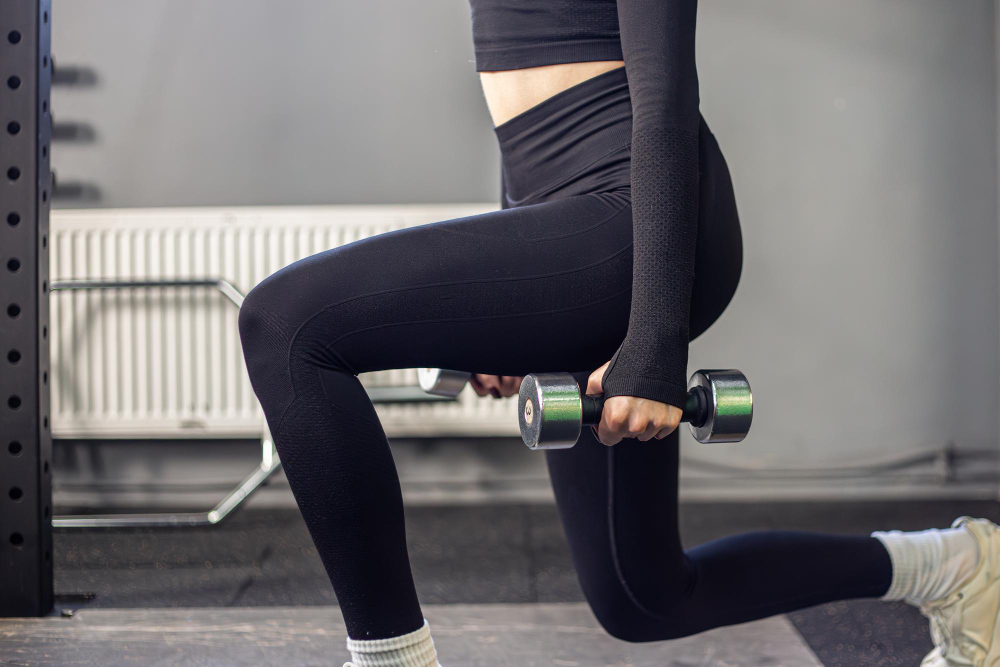
Many clinicians worry about what type of exercise should be prescribed for gluteal pain syndrome. 

The type of exercise (concentric, eccentric or isometric) is less important than using a training programme for tendon and muscle strength which is slow and progressive, prescribed in the context of the patient’s life which they can adhere to.

Uzo Ehiogu, Clinical Specialist Physiotherapist in MSK Rehabilitation, shares his top tips:


  1. Start with loading every other day that the patient can manage without significantly increasing their baseline symptoms. Whether this is isomeric, isotonic or eccentric, the type of muscle contraction does not really matter! “It’s all about adherence”.


  1. Develop muscle and tendon mass early on around the gluteal muscles with isolated strengthening exercises to increase their capacity.


  1. Don’t forget to rehab the other antigravitational muscles such as the quadriceps, gastrocnemius and soleus muscles. Many of these patients will show signs of deconditioning in these regions because of persistent disability.


  1. Progression should be based on the patient’s pain and function trend, and next day response to the previous day’s loading.


Join us at our Young Adult Hip Study Day at the Royal Orthopaedic Hospital Birmingham, 25th March where we will cover practical management of Gluteal Tendinopathy (GTPS).

Evidence sources: Clifford et al., 2019, BMJ Open Sport and Exercise Medicine, doi:10.1136/bmjsem-2019-000558. Disantis et al., 2023, J Hip Preserv Surg, doi:10.1093/jhps/hnac050.


Read more …Gluteal Pain Syndrome - What type of exercise programme should you prescribe?

  • Hits: 162

Gluteal Pain Syndrome - Assessment that separates common differentials

Back to Blogs


Gluteal Pain Syndrome - Assessment that separates common differentials 

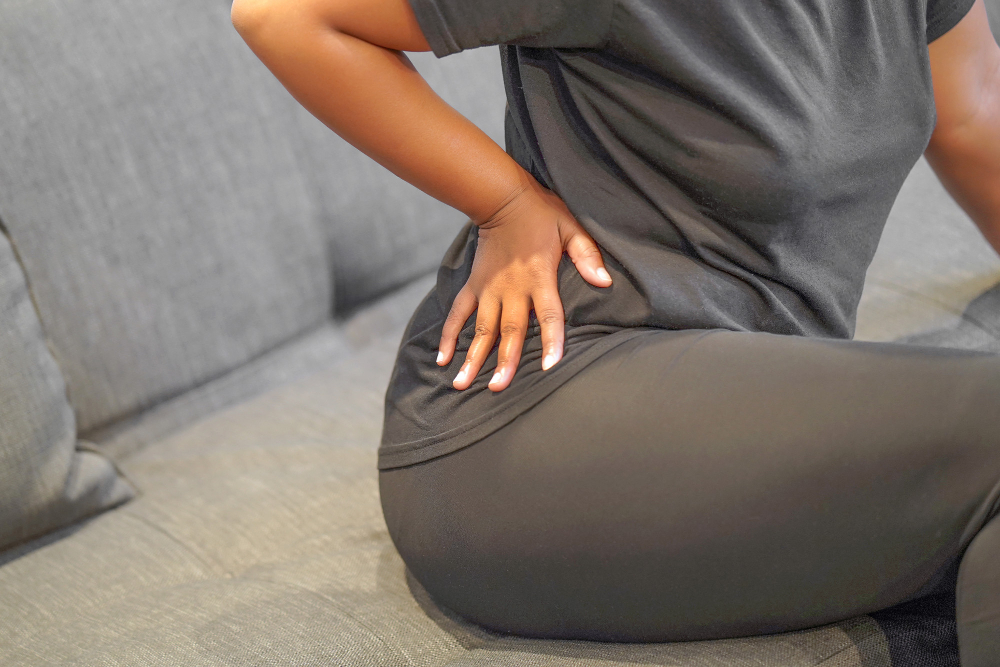
Lateral hip pain is often incorrectly diagnosed as “bursitis” and managed as an inflammatory condition. Uzo Ehiogu, Clinical Specialist Physiotherapist in MSK Rehabilitation, shares 5 things to consider in your Physical Assessment.

What is symptom behaviour?

Does the patient have pain during side-lying activities, walking up and down stairs and/ or hills or during single leg tasks.


Where does it hurt? 

Use palpation and functional provocation tests targeting lateral hip structures.


Rule out other differentials

Screen for competing pathology such as a lumbar spine referral or a hip OA pattern with a focused physical examination.


When to Image 

Imaging is reserved for atypical patterns, suspected tendon tear, or persistent failure to progress with high quality rehabilitation.


Join us at our Young Adult Hip Study Day at the Royal Orthopaedic Hospital Birmingham, 25th  March where we will cover practical assessment techniques in more detail and give you the practical tools and confidence to manage complex hip conditions like gluteal pain syndrome.

Sources: Disantis et al., 2023, J Hip Preserv Surg, doi:10.1093/jhps/hnac050. Mellor et al., 2018, BMJ, doi:10.1136/bmj. k1662.


Read more …Gluteal Pain Syndrome - Assessment that separates common differentials

  • Hits: 92

Blog

MSK Academy Blogs

Find the latest insight from our MSK experts.

  • Gluteal Pain Syndrome - Assessment that separates common differentials

    24 February 2026

    Read more

  • Gluteal Pain Syndrome - What type of exercise programme should you prescribe?

    2 March 2026

    Read More

  • Orthopaedic subspecialties: Hand and Wrist Surgery

    17 March 2026


    Read More

Read more …Blog

  • Hits: 425